
In the vibrant world of early childhood education, where imagination takes center stage, coloring activities hold a special place.
Nurseries are often filled with young learners eagerly exploring colors, expressing their creativity, and refining their fine motor skills through the joyful act of coloring.
This article celebrates the importance of coloring activities in our nursery classrooms, highlighting the numerous benefits they bring to young minds.
- Unleashing Creativity: Coloring activities provide an ideal platform for young learners to unleash their creativity. With a blank canvas before them, nursery pupils can freely choose colors, experiment with different strokes, and bring their artistic visions to life. Whether they stay within the lines or venture outside, their imagination knows no bounds. This process fosters creative thinking, allowing children to explore and express themselves in a non-judgmental environment.
- Developing Fine Motor Skills: Coloring involves the use of small muscles in the hands and fingers, which are crucial for developing fine motor skills in young children. As they grasp and manipulate coloring tools such as crayons or colored pencils, nursery pupils enhance their hand-eye coordination, dexterity, and precision. These motor skills play a fundamental role in their overall physical development, aiding them in activities such as writing, tying shoelaces, and manipulating objects later in life.

- Stimulating Cognitive Development: Engaging in coloring activities promotes cognitive development in nursery pupils. As they select colors, children learn about color theory and the relationship between different shades. They begin to understand basic concepts such as primary and secondary colors, as well as how colors can evoke different emotions. Moreover, coloring encourages focus and concentration, enabling young learners to pay attention to details and follow instructions.
- Enhancing Language and Vocabulary Skills: Coloring sessions provide an opportunity for teachers to engage nursery pupils in meaningful conversations. By discussing colors, shapes, and objects depicted in their artwork, educators can expand children’s vocabulary and language skills. Teachers can encourage pupils to describe their choices, share their thoughts and feelings, and develop storytelling abilities. These interactions foster language development, communication skills, and self-expression in a nurturing learning environment.
- Promoting Emotional Well-being: Coloring activities offer emotional benefits that nurture the well-being of nursery pupils. As they immerse themselves in the creative process, children experience a sense of accomplishment and pride when they complete their artwork. Coloring also acts as a soothing and calming activity, helping young learners relax, reduce stress, and express their emotions in a positive manner. It provides an outlet for self-expression and serves as a tool for emotional development and self-regulation.
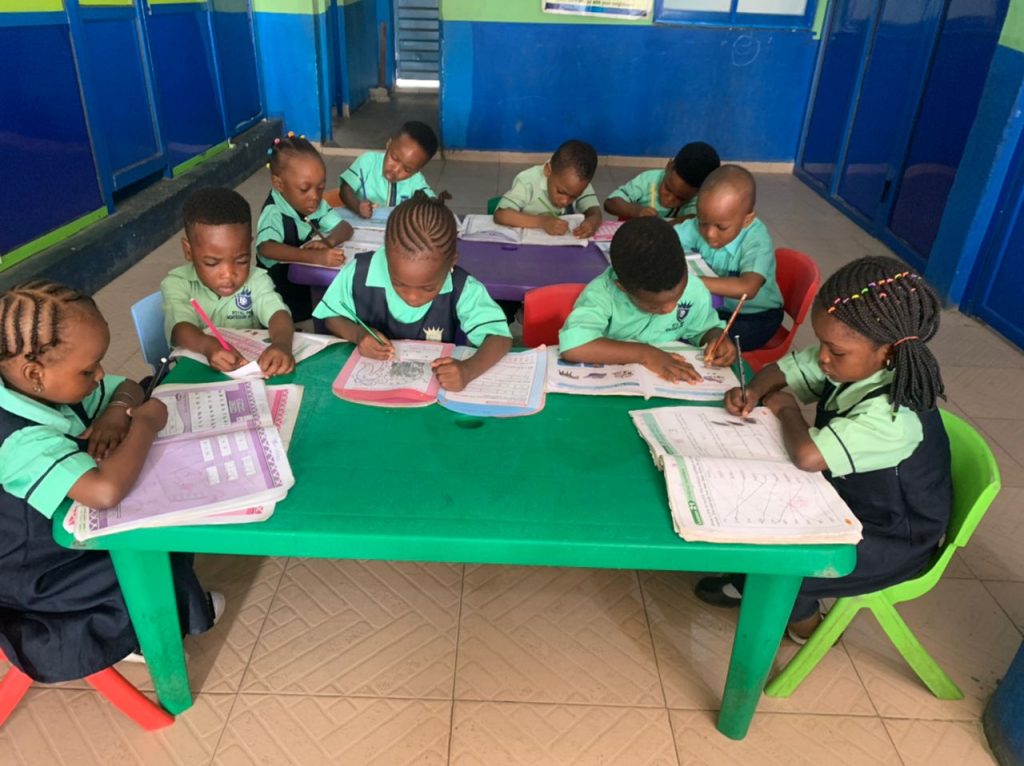
- Fostering Social Interaction and Collaboration: Coloring sessions can be conducted in groups, encouraging social interaction and collaboration among nursery pupils. Children can learn to take turns, share coloring tools, and work together on joint projects. These activities promote cooperation, empathy, and respect for others’ work. Additionally, group coloring sessions create an environment for children to appreciate different artistic styles, learn from their peers, and develop their own unique artistic identity.